
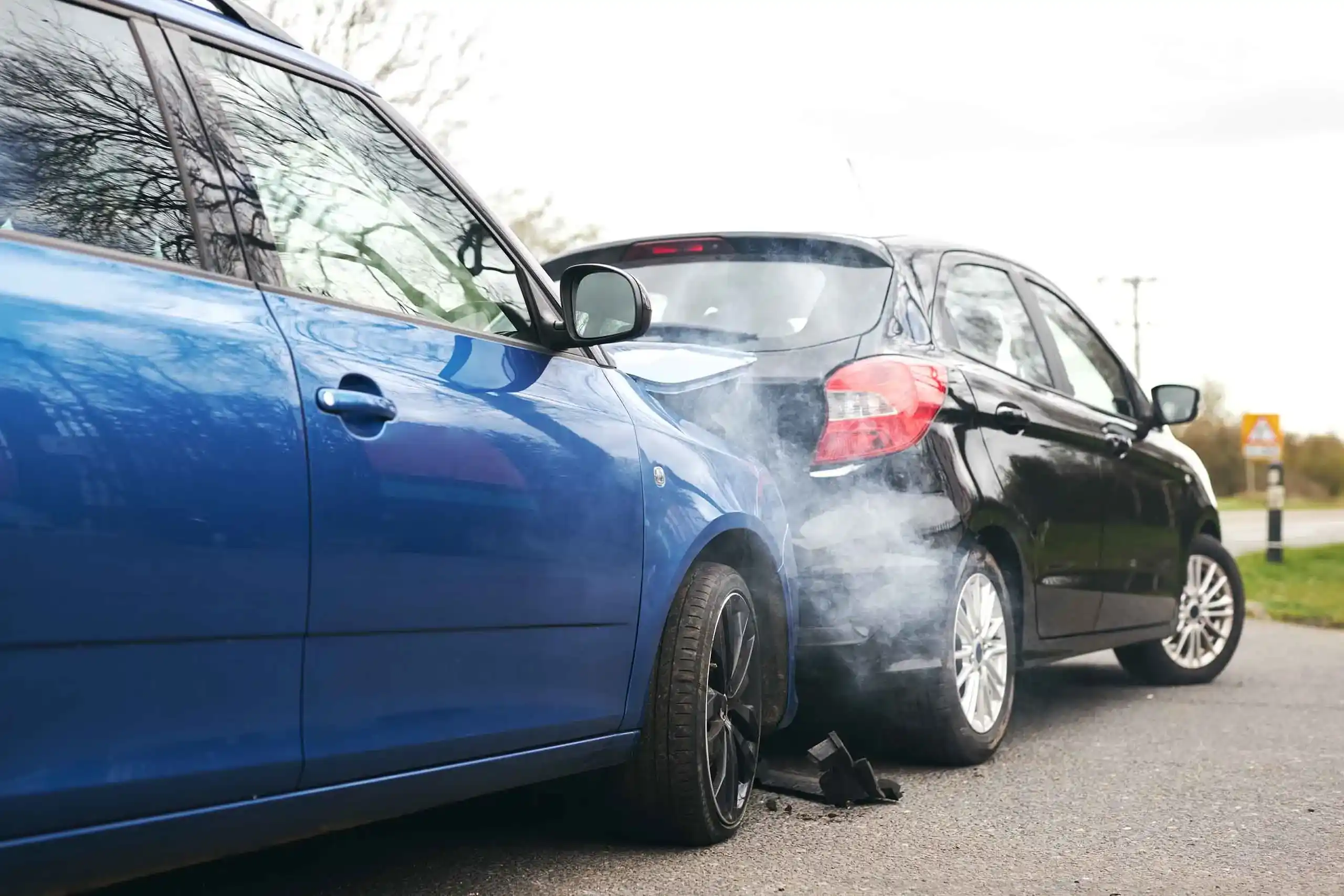
A rear-end crash can happen while you are stopped at a red light, slowing for traffic, or driving on a crowded Queens highway. Even when the vehicles are moving slowly, the sudden impact can cause neck, back, head, and other injuries that require medical treatment.
New York law places important responsibilities on drivers when following other vehicles. When a driver fails to leave enough space, becomes distracted, or does not react to slowing traffic, that driver may be responsible for the collision.
Poltielov Law Firm P.C. represents people injured in rear-end accidents throughout Queens. Call 718-880-2911 for a free consultation if another vehicle struck you from behind.
Fault in a New York Rear-End Collision
New York drivers must maintain a reasonable and safe distance from the vehicle ahead based on speed, traffic, and road conditions. When a moving vehicle strikes a stopped or stopping vehicle from behind, the circumstances can establish an inference of negligence against the rear driver.
The rear driver may try to provide a non-negligent explanation for what happened. Depending on the facts, that could involve an unexpected lane change, mechanical failure, unavoidable skidding, or another sudden circumstance.
Simply claiming that the vehicle ahead stopped suddenly does not automatically excuse the rear driver. Drivers are expected to anticipate normal stops caused by red lights, congestion, pedestrians, and other traffic conditions.
Rear-Ended While Stopped at a Red Light
Some rear-end accidents happen when a driver is completely stopped at a traffic signal. The following driver may be distracted, traveling too fast, following too closely, or simply fail to notice that traffic has stopped.
These cases may appear straightforward, but an insurance company can still dispute injuries or other parts of the claim. The insurer may question whether the crash caused a medical condition, whether treatment was necessary, or whether an earlier condition contributed to the symptoms.
Evidence showing that the vehicle was stopped can also become important if fault is disputed. A police report, dashcam footage, surveillance video, photographs, and witness statements may help establish what happened before impact.
Chain-Reaction Rear-End Accidents
A rear-end crash can involve more than two vehicles. One driver may strike a stopped vehicle and push it into another car, creating a chain reaction.
Determining fault in these collisions requires looking at the sequence of impacts. Vehicle damage, driver statements, video, witness accounts, and other evidence can help establish which vehicle started the collision and whether additional drivers contributed.
This distinction matters because a driver whose stopped vehicle was pushed forward may be accused of causing an impact that was actually created by another vehicle. Our legal team investigates the entire sequence rather than assuming every driver involved bears the same responsibility.
Rear-End Crashes Involving Taxis and Rideshare Vehicles
Queens roads carry taxis, rideshare vehicles, livery cars, and other vehicles transporting passengers throughout the day. A rear-end collision involving one of these vehicles can raise additional insurance questions.
If a taxi, Uber, Lyft, or other for-hire driver caused the crash, the insurance coverage available may depend on the vehicle and what the driver was doing at the time. Rideshare accidents can involve coverage from the driver’s personal policy, the rideshare company, or another driver involved in the collision.
When our client is a passenger, we investigate the actions of each driver and the available insurance coverage before determining how to proceed with the claim.
Commercial Trucks Can Cause Serious Rear-End Injuries
A rear-end collision involving a commercial truck can involve very different forces than an impact between passenger vehicles. Large trucks require more distance to stop, particularly when carrying heavy loads.
Driver fatigue, distracted driving, speed, mechanical failures, poor maintenance, and following too closely may contribute to these crashes. Depending on the vehicle, company records and electronic data may also become important evidence.
Commercial collisions can involve additional responsible parties beyond the driver. Commercial truck accidents may also involve company records, electronic vehicle data, maintenance records, and additional responsible parties beyond the driver.
Rear-End Collisions Involving Motorcycles and Bicycles
A motorcyclist or bicyclist struck from behind does not have the protection provided by a passenger vehicle. Even a collision at a relatively low speed can throw the rider onto the pavement or into traffic.
These cases require careful documentation of the impact and resulting injuries. Damage to the motorcycle or bicycle, nearby video, witness statements, photographs, and medical records can help establish what happened.
The type of vehicle does not eliminate the following driver’s obligation to maintain a safe distance. The circumstances of the collision determine how fault is evaluated.
Distracted Driving Can Lead to Rear-End Crashes
Rear-end accidents can happen in seconds when a driver looks away from the road. Texting, using navigation, reaching for an object, speaking with passengers, or other distractions can prevent a driver from noticing that traffic has slowed.
Heavy traffic can make distraction especially dangerous because vehicle speeds change quickly. A driver may have only a short time to respond when cars ahead begin braking.
Depending on the case, witness accounts, video, driver statements, and other records may help establish whether distraction contributed to the crash.
Injuries May Not Be Obvious Immediately
Whiplash and other soft-tissue injuries are often associated with rear-end impacts, but these crashes can cause much more than temporary neck pain. Injuries may involve the back, shoulders, head, spine, knees, or other parts of the body.
Some symptoms develop gradually after the collision. Headaches, stiffness, dizziness, numbness, reduced movement, and increasing pain may become noticeable hours or days later.
Seek medical attention when you are hurt or develop symptoms after a collision. Medical records can document your condition, treatment, and how your injuries change during recovery.
New York No-Fault Benefits After a Rear-End Accident
New York’s no-fault system generally provides Personal Injury Protection benefits after a motor vehicle accident, regardless of who caused the crash. These benefits can cover qualifying medical expenses, lost earnings, and certain other reasonable expenses, subject to policy terms and legal requirements.
New York requires at least $50,000 in basic no-fault coverage per person. This insurance can provide important benefits while an injured person receives treatment and misses work.
No-fault benefits and a claim against a negligent driver are not the same thing. New York’s serious injury rules can affect whether an injured person may pursue damages for pain and suffering outside the no-fault system.
Uninsured Drivers Can Create Additional Insurance Questions
Some drivers operate vehicles without the insurance required by New York law. Others may leave the scene before they can be identified.
When that happens, your own insurance coverage may become important. Uninsured motorist coverage can provide a potential source of recovery in qualifying circumstances.
A claim involving your own insurance company can still involve disputes over coverage, fault, injuries, and damages. Having your own insurer involved does not necessarily mean every part of the claim will be accepted without question.
Evidence Can Help Establish How the Crash Happened
Rear-end collisions often happen quickly, and the vehicles may be moved before important details are documented. If you can do so safely, take photographs or video of the accident scene, vehicle damage, roadway, traffic signal, and surrounding conditions.
Get the names and contact information of witnesses. Exchange insurance and contact information with the other driver and report the crash to police when required or when someone is injured.
Dashcams, nearby surveillance cameras, traffic cameras, and other video may provide additional evidence. Keeping copies of medical records, insurance correspondence, repair information, and other documents can also help support a personal injury claim.
Compensation After a Rear-End Accident
A person injured because of another driver’s negligence may be able to seek compensation for losses caused by the collision. The damages available depend on the injuries, insurance coverage, fault, and other facts of the case.
Economic damages can include medical expenses, lost wages, reduced earning ability, and other documented financial losses. Property damage to a vehicle may also be part of the insurance claim.
Non-economic damages can include pain and suffering when New York law permits those damages to be pursued. Rather than relying on an average settlement amount, we evaluate the medical evidence and financial effects of each client’s injuries.
New York’s Comparative Negligence Rule
Rear-end accidents do not always involve only one negligent person. Depending on the circumstances, more than one driver’s actions may contribute to the collision.
New York follows a pure comparative negligence system. A person who shares some responsibility for an accident may still recover damages, although the recovery can be reduced according to that person’s percentage of fault.
This makes evidence particularly important when an insurance company claims the front driver contributed to the crash. We review the circumstances and available evidence rather than accepting an insurer’s version of events.
The Deadline for Filing a Lawsuit
New York generally provides three years from the date of a car accident to file a negligence-based personal injury lawsuit. Missing the applicable statute of limitations can prevent a lawsuit from moving forward.
Some cases have much shorter requirements. For example, a crash involving a government entity or government-operated vehicle may trigger special notice rules, including a Notice of Claim deadline that can be as short as 90 days.
There are also insurance deadlines that can arise much sooner than the lawsuit deadline. For that reason, three years should not be treated as a reason to wait before investigating a rear-end accident.
Frequently Asked Questions About Rear-End Collisions
Is the Rear Driver Always at Fault in New York?
No. A rear-end collision with a stopped or stopping vehicle generally creates an inference of negligence against the rear driver, but that driver may present a non-negligent explanation for the collision. The evidence and circumstances determine whether another driver’s actions also contributed.
Is a Sudden Stop Enough to Blame the Front Driver?
Not necessarily. Drivers are expected to anticipate ordinary stops caused by traffic, signals, and roadway conditions. A claim that the lead vehicle suddenly stopped, standing alone, may not be enough to overcome the inference of negligence against the rear driver.
What Should I Do After Being Rear-Ended?
Check for injuries and call 911 when emergency assistance is needed. If you can do so safely, photograph the vehicles and accident scene, collect witness information, exchange contact and insurance details, and report the collision as required. Seek medical attention if you are injured or develop symptoms after the crash.
What If I Was Rear-Ended by an Uninsured Driver?
Your own uninsured motorist coverage may provide benefits when an uninsured driver causes a qualifying collision. Coverage depends on the policy and circumstances of the crash. Other potential sources of insurance should also be investigated before determining what compensation may be available.
Can I Sue After a Rear-End Accident in New York?
Potentially. New York’s no-fault system provides certain benefits regardless of fault, while the state’s serious injury threshold affects when damages such as pain and suffering may be pursued against another driver. Whether you can bring a personal injury lawsuit depends on your injuries and the facts of the collision.
How Long Do I Have to File a Rear-End Accident Lawsuit?
New York generally provides three years from the accident date for a negligence-based personal injury lawsuit arising from a car crash. Shorter deadlines can apply in some cases, particularly when a government entity is involved. Insurance-related deadlines may also arise much earlier.
How Much Is a Rear-End Accident Claim Worth?
There is no standard value for a rear-end accident claim. The amount depends on factors such as the injuries, medical treatment, lost income, property damage, available insurance coverage, fault, and whether the injuries have lasting effects. We review those factors before evaluating a potential settlement.
Talk With a Queens Rear-End Collision Attorney
Poltielov Law Firm P.C. represents people injured in rear-end accidents throughout Queens. We investigate how the collision occurred, gather available evidence, review insurance coverage, document injuries and losses, and handle communications with insurance companies.
We represent people injured in car accidents throughout Queens, including rear-end crashes involving passenger vehicles, commercial trucks, taxis, rideshare vehicles, and other motorists. If you were struck from behind and want to discuss your legal options, call 718-880-2911 for a free consultation.