
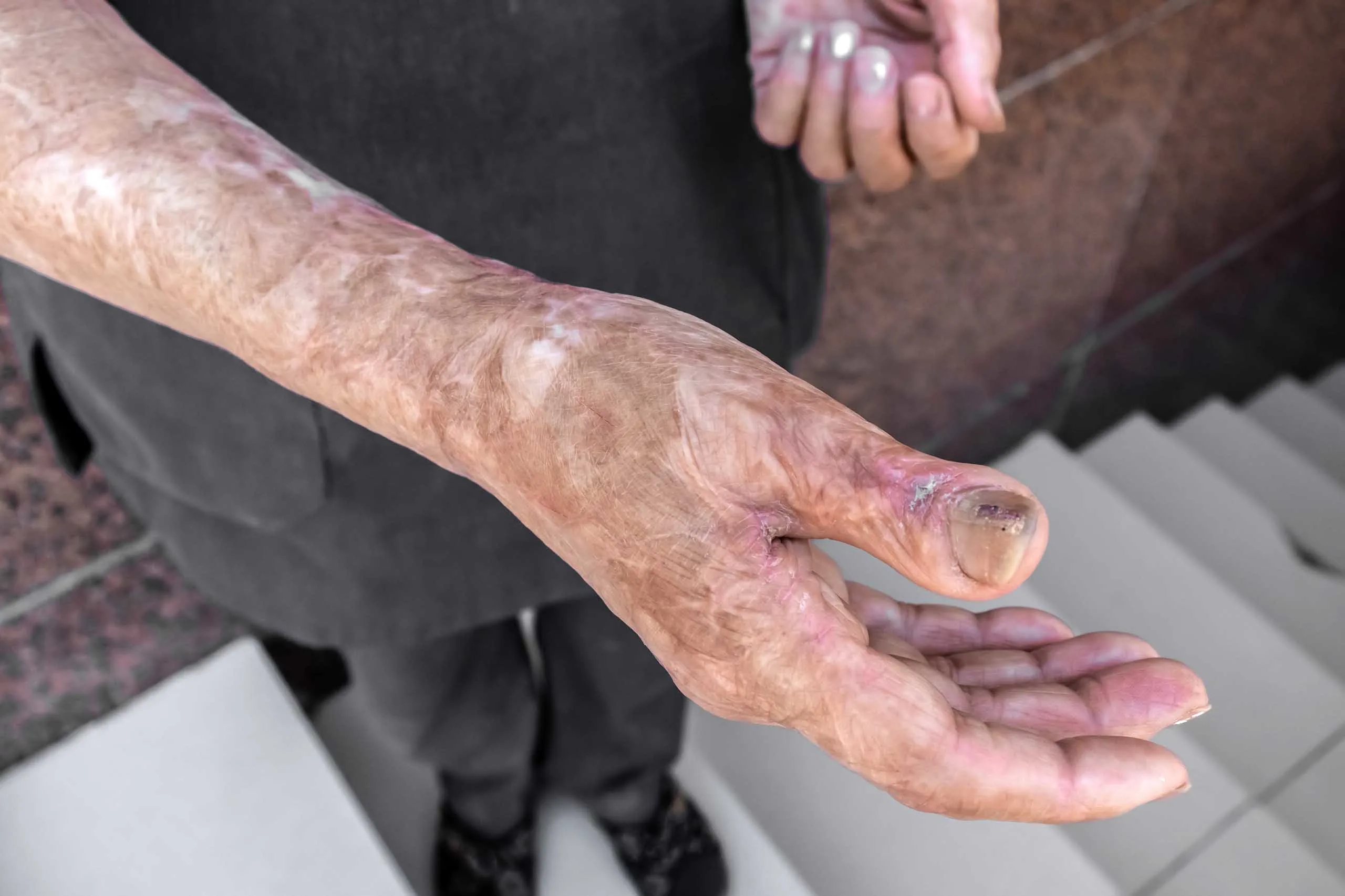
A serious accident can leave injuries that remain visible long after broken bones, cuts, and other wounds have healed. Permanent scarring or disfigurement can affect a person’s physical appearance, movement, confidence, work, and daily life. For some people, additional surgeries and other treatments may continue for years.
If your scarring and disfigurement injuries were caused by someone else’s negligence, you may have the right to pursue compensation. A Queens disfigurement and scarring lawyer at Poltielov Law Firm P.C. can investigate what happened, document the full effect of your injuries, and determine which parties may be legally responsible.
Call (718) 880-2911 for a free consultation about your legal options.
Scarring and Disfigurement Can Cause Lasting Harm
Scarring is part of the body’s healing process after the skin is damaged, but some scars are far more significant than others. Deep wounds, burns, surgical procedures, and traumatic injuries can leave thick, raised, discolored, depressed, or otherwise noticeable scar tissue. In some cases, scars can also cause itching, sensitivity, pain, or restricted movement.
The location of an injury can be especially important. Facial injuries may leave visible scars that are difficult or impossible to conceal, while scarring across a joint or another frequently moving area may create functional problems. Other scars may cover large portions of the body following burns or extensive trauma.
The consequences are not always purely cosmetic. Scarring and disfigurement can cause physical discomfort, interfere with work or hobbies, and create an emotional toll that continues long after the original injury. Evaluating a claim therefore requires looking beyond the initial wound and considering how the injury affects the person’s life over time.
Accidents That Can Cause Permanent Scarring
Many different accidents and acts of negligence can cause disfigurement injuries. The type of accident matters because it helps determine who may be responsible and what evidence is needed to support the claim.
Common causes include:
- Car accidents
- Motorcycle and bicycle crashes
- Slip and fall accidents
- Dog bites and animal attacks
- Construction accidents
- Workplace accidents
- Fires and explosions
- Chemical and thermal burns
- Defective products
- Deep cuts and lacerations
- Surgical errors and other forms of medical malpractice
Car crashes can cause facial injuries when a person’s face strikes glass, the steering wheel, an airbag, or another part of the vehicle. Broken glass and metal can also cause deep wounds. Burns or severe road rash can result in additional permanent scarring after a serious collision.
Dog bites are another potential source of facial scars, particularly when a child or adult is bitten on the face, neck, arms, or hands. Construction and workplace accidents may cause burns, crushing injuries, deep lacerations, or wounds requiring surgery. Each type of accident creates different questions about negligence, insurance, and responsibility.
Facial Scars Can Have a Significant Impact
The face is one of the first things people notice about each other. A permanent scar on the forehead, cheek, nose, chin, or another prominent area can therefore affect an injured person’s life differently from a scar that is normally covered by clothing.
That does not mean every facial scar automatically has a particular financial value. The size, color, texture, location, visibility, permanence, and effect of facial injuries can all be relevant when evaluating damages. Photographs and opinions from treating physicians or other medical professionals may help document these characteristics.
Severe facial injuries can also require treatment from plastic surgeons or other specialists. Some people undergo reconstructive surgery, scar revision, laser treatment, injections, or other procedures in an effort to reduce the appearance or physical effects of the injury. Future treatment recommendations and expected medical costs should be considered when documenting the claim.
When Scarring Affects Movement and Physical Function
Some scars cause more than a change in physical appearance. Scar tissue can tighten as it develops, potentially affecting movement when it forms near joints or across areas of the body that regularly stretch and bend.
A person with a significant scarring injury may require additional medical treatment, occupational care, or physical therapy to improve movement and function. When the damage is extensive, treatment may include surgery or other procedures designed to release restrictive scar tissue.
These physical limitations can affect work and ordinary activities. Medical records documenting range-of-motion problems, ongoing symptoms, treatment recommendations, and the injured person’s progress can help show how the injury continues to affect daily life.
Emotional Effects of Permanent Scarring and Disfigurement
Visible scarring and disfigurement can affect how someone feels about their appearance and how comfortable they are interacting with other people. Some injury victims experience embarrassment, anxiety, reduced self-confidence, or other forms of emotional distress after an injury permanently changes their appearance.
These effects can be particularly difficult when facial injuries are involved or when a scar cannot easily be concealed. An injured person may avoid photographs, social events, dating, recreation, or activities they previously enjoyed. Some people also experience an emotional trauma response connected to both the accident and the lasting reminder it left behind.
Claims involving these losses should be supported by evidence rather than assumptions. Medical records, mental health treatment when applicable, photographs, testimony, and information about changes in the person’s activities can help document the effect of the injury.
Proving a Scarring and Disfigurement Claim
Having a scar does not automatically establish that someone else is legally responsible for it. Most negligence-based personal injury claims require evidence showing that another person or business was negligent and that the negligence caused the injuries being claimed.
The evidence needed to prove negligence depends on how the accident happened. A motor vehicle case may involve crash reports, photographs, surveillance footage, vehicle damage, and witness statements. A fall may require evidence showing that property owners knew or should have known about a dangerous condition.
Medical evidence is equally important. Medical records can document the original wound, treatment, surgeries, complications, and how the scar changed throughout the healing process. When additional treatment such as reconstructive surgery is recommended, those records can also help establish anticipated expenses and the expected long-term condition of the injury.
Photographing a Scar Throughout the Healing Process
One of the challenges in scarring and disfigurement cases is that an injury can look very different over time. A wound immediately after an accident may not resemble the scar six months or a year later.
Regular photographs can create a visual timeline showing the original injury, stitches or surgery, healing process, and the development of permanent scarring. Photos should be clear and taken consistently when possible. Keeping the original image files can also preserve useful information about when each photograph was taken.
Continue following your doctor’s recommendations while documenting the injury. Photographs do not replace medical records, but the two forms of evidence can work together to demonstrate how the physical injury developed and what effects remained after healing.
Scarring After a New York Car Accident
New York’s No-Fault rules add another issue when scarring and disfigurement injuries result from a motor vehicle crash. Under New York Insurance Law § 5102(d), “significant disfigurement” is one of the categories that can qualify as a serious injury.
That does not mean every visible scar automatically meets the threshold. Courts consider the specific evidence and characteristics of the claimed disfigurement. The appearance, prominence, and other circumstances surrounding the scar can become important when determining whether the statutory standard has been satisfied.
This distinction matters because the serious-injury threshold can affect whether an injured person may pursue certain non-economic damages after a New York motor vehicle accident. A Queens personal injury lawyer can evaluate the medical and photographic evidence and determine how the threshold applies to the circumstances of a particular claim.
Medical Malpractice That Causes Scarring
Some scarring and disfigurement results from medical care rather than an accident. A surgical procedure naturally involves some risk of scarring, so the existence of a surgical scar alone does not establish medical malpractice.
A malpractice claim instead requires evidence that a healthcare provider departed from the applicable standard of care and caused harm. Depending on the circumstances, a claim involving medical negligence could concern a surgical error, improper wound treatment, infection management, or another preventable complication that caused additional injury.
These cases have different legal and evidentiary requirements from ordinary negligence cases. Medical malpractice claims also have different filing deadlines, making it important to identify the type of claim before assuming the ordinary personal injury deadline applies.
Compensation for Scarring and Disfigurement Injuries
The potential value of a claim depends on the circumstances and the losses caused by the injury. There is no standard settlement amount for a scar, and two people with superficially similar injuries may have very different damages.
Depending on the case, compensation may address:
- Past and future medical expenses
- Plastic or reconstructive procedures
- Therapy and rehabilitation
- Medical bills and other out-of-pocket expenses
- Lost wages and reduced earning ability
- Physical pain and discomfort
- Emotional distress
- Changes to physical appearance
- Loss of enjoyment of activities
- Other economic and non-economic losses
Future care can be especially important when doctors recommend additional scar revision or reconstructive surgery. A claim should consider supported future costs rather than focusing only on the medical bills that have already arrived.
The insurance company may dispute whether certain treatment is necessary, whether the scar is permanent, or how much the injury affects the person’s life. Evidence documenting these issues can help an injured person pursue fair compensation based on the actual effects of the injury.
How Visibility and Permanence Can Affect a Claim
There is no formula that assigns a dollar amount based on the length or location of a scar. However, the nature of the disfigurement scarring is one of many factors that can be considered when evaluating damages.
A highly visible facial scar may create different consequences than a small scar in an area normally covered by clothing. Likewise, an injury that restricts movement or requires future procedures can create additional losses beyond a change in appearance.
Doctors may need time to determine whether severe scarring is permanent and whether further treatment could improve it. For that reason, resolving a claim before the long-term condition is understood can make it difficult to accurately evaluate future medical expenses and other losses.
New York Deadlines for Scarring Injury Claims
Many negligence-based personal injury cases in New York are subject to a three-year statute of limitations. However, different deadlines can apply depending on who caused the injury and the legal basis of the claim.
For example, New York generally provides a two-year-and-six-month limitations period for medical malpractice actions, subject to specific rules and exceptions. Claims involving New York City or another government entity can also involve much shorter notice requirements.
Because the deadline depends on the circumstances, an injured party should not assume every case involving a scar has three years. Identifying the responsible parties early also gives an attorney more time to preserve evidence before records, video, or witness information becomes unavailable.
How Poltielov Law Firm Handles Scarring Injury Claims
Poltielov Law Firm P.C. represents people who have suffered scarring and disfigurement because of another party’s negligence. We begin by investigating how the accident happened and identifying the evidence needed to establish responsibility.
We also document the injury itself. That may include reviewing photographs, medical records, treatment recommendations, surgical reports, employment information, and other evidence showing how the injuries caused financial, physical, and emotional harm.
Our personal injury attorneys handle communications with insurers and pursue compensation based on the evidence supporting the claim. If an insurance company refuses to offer a reasonable resolution, we can discuss the legal options available for continuing the case.
Frequently Asked Questions About Scarring and Disfigurement Claims
Is permanent scarring considered a serious injury in New York?
It can be in some circumstances. For motor vehicle cases, New York Insurance Law includes “significant disfigurement” within its definition of a serious injury, but not every scar automatically meets that standard. The particular appearance and evidence surrounding the scar matter. A lawyer can review photographs, medical evidence, and the circumstances of the injury to determine whether the serious-injury threshold may apply.
What evidence should I keep after suffering a disfiguring injury?
Keep photographs showing the injury throughout the healing process, along with medical records, bills, treatment instructions, and information about missed work. If the injury resulted from an accident, preserve photographs and other evidence showing where and how the incident occurred. You should also keep documentation of future treatment recommendations and medical appointments. Together, this evidence can help show both how the injury occurred and how it affected your life.
Can I recover compensation for emotional distress caused by a permanent scar?
Non-economic damages may include emotional and psychological effects when they are legally recoverable and supported by the facts of the case. Visible facial scars or other permanent changes to a person’s appearance can have consequences that extend beyond the original physical wound. The strength and value of these damages depend on the individual evidence. Treatment records, testimony, photographs, and documented changes in daily activities may help establish the emotional toll associated with the injury.
Can I recover the cost of future scar revision or plastic surgery?
Future treatment costs may be recoverable when they are related to the injury and supported by appropriate evidence. This can include recommended reconstructive surgery, scar revision, or other treatment intended to address the physical effects of the injury. It is important to understand the expected course of treatment before resolving a claim. Settling before future medical needs are adequately evaluated can leave an injured person responsible for costs that were not properly considered.
How long do I have to file a scarring injury claim in New York?
Many New York negligence-based personal injury actions have a three-year limitations period, but exceptions and shorter deadlines exist. Medical malpractice generally has a different limitations period, and claims involving government entities can trigger special notice requirements. The deadline should therefore be determined from the specific facts rather than assumed. Speaking with an attorney early can also help preserve evidence while the injury and accident are still well documented.
What if the insurance company says my scar is only cosmetic?
A scar’s impact is not necessarily limited to appearance. Some scars cause pain, sensitivity, restricted movement, additional treatment needs, or lasting emotional effects. Medical evidence and photographs can help demonstrate these consequences. A personal injury attorney can also document the financial and non-economic losses associated with the injury when seeking compensation from the responsible party.
Speak With a Queens Lawyer About Permanent Scarring
A permanent scar can remain long after the accident itself is over. When that scar affects your appearance, physical function, emotional well-being, career, or need for future treatment, those consequences should be carefully documented.
Poltielov Law Firm P.C. represents accident victims and other injury victims throughout Queens. Our disfigurement attorneys can investigate whether someone else’s negligence caused your injuries and explain your options for seeking compensation through the legal process.
Call (718) 880-2911 or contact Poltielov Law Firm P.C. to schedule a free case evaluation.