
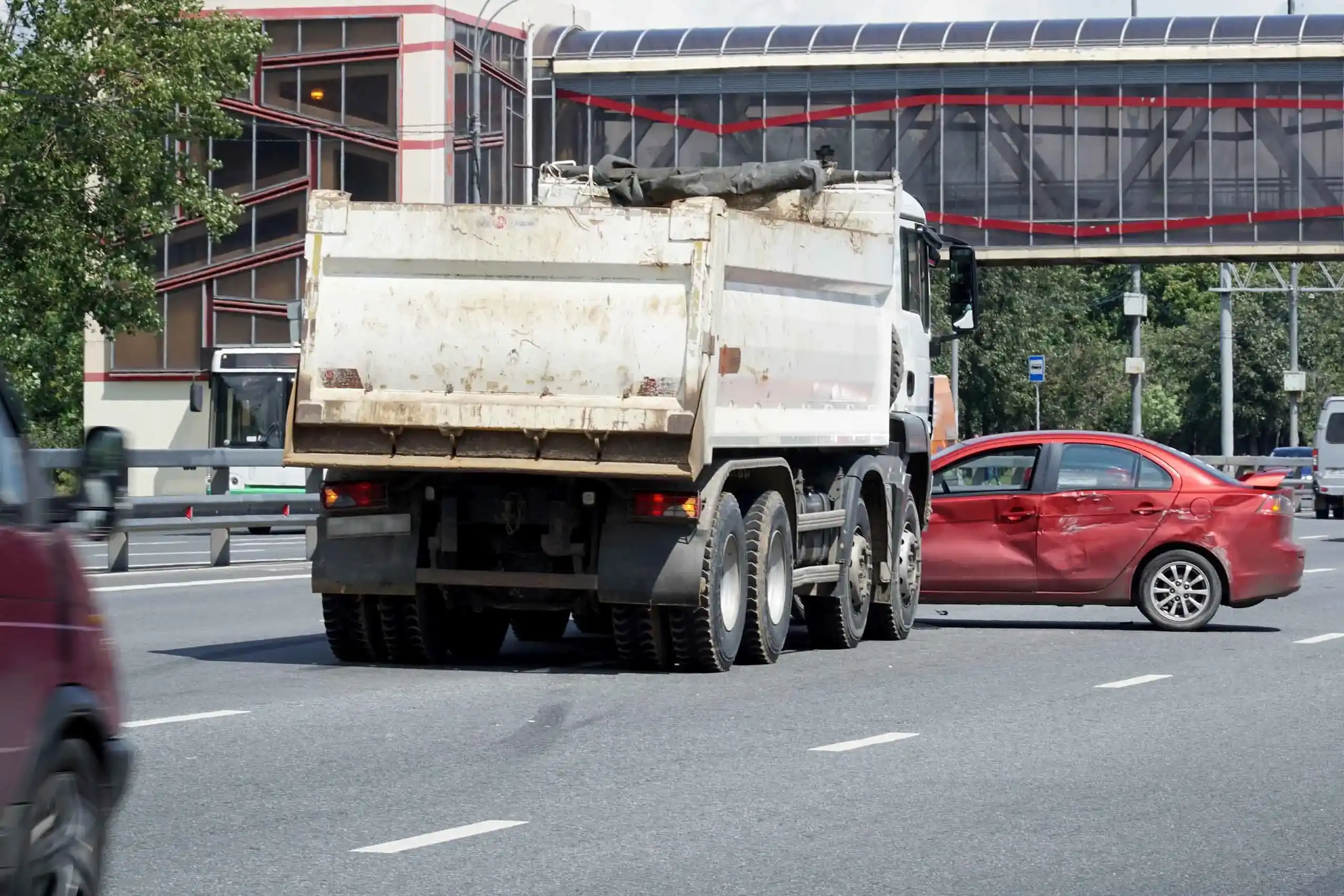
Garbage trucks and sanitation vehicles are common throughout Queens, but their size and weight can make a collision far more serious than an ordinary car accident. These vehicles operate on residential streets, near businesses, around pedestrians and cyclists, and in areas where drivers have limited room to maneuver. When a garbage truck accident causes serious injuries, determining who owns and operates the vehicle can be one of the most important parts of the case.
At Poltielov Law Firm P.C., our garbage truck accident lawyers represent people injured by municipal sanitation vehicles, private waste haulers, and other heavy trucks throughout Queens. A garbage truck accident case may involve the City of New York, a private company, a truck driver, a vehicle owner, or multiple parties. Our attorneys investigate the crash, preserve evidence, determine available insurance coverage, and pursue compensation for the losses caused by the collision.
Our Queens garbage truck accident attorney can explain the difference between a claim involving the New York City Department of Sanitation and one involving a private company. Those cases can have very different filing requirements and deadlines. Call 718-880-2911 for a free consultation if you were seriously injured in a garbage truck crash.
Garbage and Dump Truck Accidents Are Different From Other Truck Crashes
Garbage trucks present risks that are different from tractor-trailers and many other commercial vehicles. They frequently stop, back up, turn through neighborhood streets, and operate close to parked cars, driveways, pedestrians, cyclists, and sanitation workers. A truck driver must account for limited visibility and the people and vehicles around the truck while completing these movements safely.
Vehicles carrying construction material present different risks. Heavy loads, mechanical problems, improper loading, or instability can contribute to rollovers and other serious accidents. Material can also fall or spill from a vehicle when a load is not properly contained or secured.
Ownership is another major difference between these truck accident cases and many other commercial truck accidents. A New York City Department of Sanitation vehicle can trigger special municipal claim procedures, while a privately owned vehicle generally follows the rules applicable to private defendants. Identifying the owner early helps determine which laws, deadlines, and insurance coverage may apply.
Garbage Truck Accidents in Queens
Garbage collection vehicles operate throughout residential and commercial neighborhoods in Queens. Their work requires repeated stops and movements in areas where other motorists, pedestrians, cyclists, and workers may be nearby. A garbage truck accident can happen when a vehicle backs into traffic, strikes a pedestrian, makes an unsafe turn, fails to yield, or enters a roadway without enough clearance.
People walking or biking can be especially vulnerable because of the size of the vehicle and the driver’s blind spots. A sanitation truck can also collide with parked or moving vehicles during a collection route. The circumstances of each truck crash determine whether the driver, employer, vehicle owner, municipality, or another party may be responsible.
Evidence in these cases can quickly become unavailable. Surveillance video may be overwritten, vehicles can be repaired, and witnesses may become difficult to locate. Photographs, video, company information, the police report, and other records should be preserved as early as possible.
Accidents Involving Construction Hauling Trucks
Heavy hauling vehicles are used throughout Queens to move dirt, gravel, demolition debris, asphalt, and other construction materials. Their weight can make a collision particularly dangerous for occupants of smaller passenger vehicles. Workers, cyclists, and pedestrians near construction or loading areas can also suffer severe injuries.
Some accidents result from speeding, distracted driving, unsafe turns, or failure to yield. Others may involve overloaded or improperly secured material, poor vehicle maintenance, brake or tire failures, or instability during loading and unloading. Mechanical failures can turn an otherwise routine trip into a serious truck accident.
Liability can extend beyond the truck driver. An employer, contractor, vehicle owner, maintenance provider, or loading company may have contributed to the crash. These relationships are one reason truck accident cases often involve multiple potentially liable parties.
City Sanitation Vehicles and Private Waste Haulers
One of the first questions after a garbage truck accident is who owned the vehicle. Some collection vehicles belong to the New York City Department of Sanitation, while others are operated by private waste and recycling businesses. A private sanitation truck may look similar to a municipal vehicle, but the legal process for pursuing compensation can be very different.
When a private sanitation truck is involved, an investigation may examine the driver’s actions, training, employment relationship, vehicle maintenance, and company practices. A private company may also have commercial insurance coverage that applies to the collision. The available policy limits and other sources of insurance coverage should be identified before evaluating the full value of the claim.
A New York garbage truck accident involving a municipal vehicle requires a different analysis. Claims against the New York City Department of Sanitation are subject to government claim procedures that do not ordinarily apply to a private waste company. Missing one of those procedural steps can create serious problems for an otherwise valid case.
Claims Involving the New York City Department of Sanitation
A person injured because of the alleged negligence of a New York City Department of Sanitation driver may have a personal injury claim against the City. For many municipal injury claims, a Notice of Claim generally must be served within 90 days after the claim arises. Additional procedural requirements must then be satisfied before a truck accident lawsuit against the City can proceed.
The general statute of limitations for qualifying tort claims against New York City is one year and 90 days, although exceptions and tolling rules can affect particular cases. Courts may also consider applications for permission to serve a late Notice of Claim in certain circumstances, but approval is not guaranteed. Anyone injured by a City sanitation truck should have the applicable deadlines reviewed promptly.
The distinction between municipal and private ownership makes these cases particularly important to investigate early. A police report, photographs, vehicle markings, and agency information can help confirm ownership. A skilled attorney can then determine which notices, claims, and filing requirements apply.
Accidents Involving Private Garbage Companies
Private waste companies operate garbage, recycling, and hauling vehicles throughout Queens. When a private sanitation truck causes an accident, the truck driver may be liable for negligent operation, but the investigation should not necessarily stop with the person behind the wheel. The driver’s employer, vehicle owner, or another business may also share responsibility.
Company records can provide important evidence in truck accident cases. Driver information, inspection and maintenance documents, employment records, electronic data, and route or dispatch information may help explain what happened. Accident reconstruction experts may also be used when the parties dispute vehicle movements, speed, visibility, or the mechanics of the collision.
For many negligence claims involving a private company, New York provides a three-year statute of limitations for personal injury actions. Different claims or circumstances can have different deadlines, so injured people should not assume every case receives exactly three years. Hiring a skilled attorney early can also help secure evidence long before the filing deadline approaches.
Common Causes of Garbage Truck Accidents
No two collisions happen for exactly the same reason. A garbage truck accident lawsuit involving a backing collision may depend on very different evidence from a case involving brake failure or an unsafe turn. Identifying the cause helps determine who may be legally responsible.
Potential causes include:
- Unsafe backing;
- Failure to check blind spots;
- Distracted driving;
- Failure to yield;
- Speeding or driving too fast for conditions;
- Unsafe turns;
- Driver fatigue;
- Inadequate driver training;
- Brake, tire, or mechanical failures;
- Poor vehicle maintenance;
- Improperly loaded materials; and
- Unsecured or unstable loads.
Driver fatigue, distraction, training, and maintenance can be relevant, but they should not be assumed to have caused a particular collision without evidence. Truck accident lawyers may examine driver records, company documents, vehicle condition, electronic information, and other evidence to determine what actually contributed to the crash.
Liability in Truck Accident Cases
The truck driver is often the most obvious person to investigate after a collision, but other parties may share responsibility. Employers can sometimes be responsible for conduct by employees acting within the scope of their work. Vehicle owners, maintenance providers, contractors, and other businesses may also become defendants when their conduct contributed to the accident.
This is particularly important in truck accident cases involving several companies. A vehicle may be owned by one business, operated by another, maintained by a third party, or used on a construction project involving additional contractors. Identifying these relationships can reveal additional evidence and insurance coverage.
A municipal garbage truck accident case adds another layer because government entities follow special procedural rules. Our truck accident attorneys investigate ownership, employment, maintenance, and contracting relationships before determining which parties should be included in a truck accident claim.
Evidence in a Garbage Truck Accident Case
Timely evidence preservation is especially important after a collision involving a commercial or municipal vehicle. Surveillance video, electronic information, maintenance documents, and physical evidence may not remain available indefinitely. Starting the investigation early gives personal injury lawyers more opportunities to request and preserve useful information.
Depending on the case, evidence may include:
- The police report and other accident reports;
- Photographs and video;
- Surveillance or traffic-camera footage;
- Driver and vehicle information;
- Inspection and maintenance records;
- Electronic vehicle data;
- Company and employment records;
- Route or dispatch information;
- Loading information when relevant;
- Medical records; and
- Expert analysis.
The evidence needed depends on what is disputed. Accident reconstruction experts may help analyze a complicated truck crash, while maintenance specialists may be more useful when a mechanical failure is suspected. Documentation connecting the injuries, medical records, and treatment to the collision can also be important when insurance companies challenge the extent of the harm.
Injuries and New York’s No-Fault Rules
New York is a no-fault insurance state for motor vehicle accidents. In many cases, no-fault benefits provide payment for certain basic economic losses regardless of who caused the collision. The rules can become more complicated when a garbage or commercial truck is involved, so the available benefits and policies should be reviewed based on the specific vehicles and people involved.
To pursue non-economic damages such as physical pain and suffering in a covered motor vehicle case, an injured person generally must satisfy New York’s statutory serious injury threshold. Qualifying injuries can include fractures, significant disfigurement, permanent loss of use, and other categories defined by state law. Serious accidents involving heavy trucks can produce injuries that require surgery, rehabilitation, or long-term medical care.
Economic damages may include medical bills, lost wages, future medical care, and reduced earning capacity. Property damage may also be part of a separate claim arising from the collision. Personal injury lawyers should evaluate the full impact of the injuries rather than focusing only on the first set of medical bills.
Compensation After a Garbage Truck Accident
People injured because of another party’s negligence may be able to recover compensation through insurance claims or a personal injury lawsuit. The amount depends on liability, the injuries, financial losses, available insurance coverage, and other circumstances. No attorney can promise maximum compensation or a particular settlement amount before evaluating the evidence.
Recoverable losses may include medical expenses, lost wages, reduced earning capacity, rehabilitation costs, property damage, and non-economic damages when permitted by New York law. Physical pain and the effect of a serious injury on daily life may be relevant when the statutory requirements for recovery are satisfied. In unusual cases involving sufficiently reckless or egregious conduct, punitive damages may also be considered.
Fatal collisions can lead to a separate wrongful death claim brought by the proper estate representative. Those claims may include qualifying losses such as lost financial support under the rules that govern death-related damages in New York. A truck accident attorney should identify which claims are supported rather than treating every serious collision the same way.
Steps to Take After a Garbage Truck Crash
Safety and medical care should come first after a serious collision. Call 911 when emergency assistance is needed and report the accident to the police. Medical evaluation can also document symptoms and establish a record connecting the injuries to the collision.
When it is safe, photograph the vehicles, identifying markings, license plates, damage, road conditions, and surrounding area. Obtain contact information from witnesses and information identifying the company or government agency operating the truck. Because evidence can disappear quickly, these early records can become important later.
Be cautious when speaking with insurance companies before understanding your rights. Statements made shortly after an accident may later be used to dispute fault or the extent of the injuries. If a City-owned vehicle was involved, the shorter Notice of Claim period makes prompt legal review especially important.
How Poltielov Law Firm Handles Truck Accident Claims
Our law firm begins by determining who owned and operated the vehicle and what caused the collision. Depending on the circumstances, we may review reports, video, photographs, vehicle information, company records, medical documentation, and other available evidence. We also investigate whether multiple people, businesses, or government entities may share responsibility.
Our truck accident attorneys identify applicable insurance policies, communicate with insurance companies, document damages, and pursue a fair resolution. When liability or damages are disputed, we prepare the truck accident claim for litigation and use qualified experts when the evidence calls for them. We do not rely solely on an insurer’s investigation to tell our client’s side of the story.
Garbage and sanitation vehicles are a specialized part of our broader commercial truck practice. For crashes involving tractor-trailers, semi-trucks, and other commercial vehicles, our Queens truck accident lawyers address the issues specific to those cases. This page focuses on the distinct legal and practical issues created by municipal sanitation vehicles and private waste haulers in Queens.
Frequently Asked Questions About Garbage Truck Accidents
Who Is Liable When a City Sanitation Truck Causes an Accident?
New York City may be legally responsible when negligence by an employee operating a City sanitation vehicle within the scope of employment causes a collision. Liability still must be established based on the evidence. Claims against the City also require procedural steps that do not ordinarily apply when suing a private company.
How Long Do I Have to File a Claim Against New York City?
A Notice of Claim generally must be served within 90 days after a municipal personal injury claim arises. The general deadline for commencing a qualifying tort action against the City is one year and 90 days, although exceptions or tolling rules may apply. Courts can consider certain applications involving a late notice, but injured people should not rely on receiving an extension.
How Long Do I Have to Sue a Private Garbage Company?
Many New York personal injury actions based on a vehicle collision have a three-year statute of limitations. That does not mean every possible claim has the same deadline. A truck accident attorney should determine the applicable period based on the defendants and legal claims involved.
Can I Sue a Private Garbage Company After an Accident?
Yes, when evidence supports liability. A private company may be responsible for its driver’s conduct or for its own negligent actions involving matters such as maintenance or other company responsibilities. A truck accident lawsuit may include multiple defendants when more than one party contributed to the collision.
What Happens If a Garbage Truck Backs Into My Car?
A backing collision should be investigated to determine what the driver could see, where the vehicles were positioned, and what precautions were taken. Video, photographs, witnesses, vehicle damage, and the police report may help establish fault. Neither driver should automatically be assumed responsible without considering the evidence.
Can I Recover Compensation If I Was Partially at Fault?
Possibly. New York follows a comparative negligence system, which means a person’s share of fault does not automatically prevent recovery. Compensation can generally be reduced according to the percentage of responsibility assigned to that person.
What Evidence Should Be Preserved After a Garbage Truck Accident?
Useful evidence may include photographs, video, witness information, vehicle markings, medical records, the police report, and documentation of financial losses. Attorneys may also seek company records, maintenance information, electronic data, or government records when relevant. Acting early can be important because some evidence may be overwritten, altered, or lost.
How Much Is a Garbage Truck Accident Case Worth?
There is no standard settlement value for a garbage truck accident case. Compensation depends on factors such as liability, severity of the injuries, medical treatment, lost income, future limitations, insurance coverage, and whether non-economic damages are available. Be cautious of anyone promising maximum compensation before reviewing those facts.
Speak With a Queens Garbage Truck Accident Lawyer
If you were injured by a garbage or sanitation vehicle in Queens, identifying who owned and operated it should be one of the first steps. A New York garbage truck accident involving the City follows different procedures from one involving a private sanitation truck, and evidence important to either case may disappear while you are recovering.
Poltielov Law Firm P.C. represents people injured in serious accidents throughout Queens. Our garbage truck accident lawyers investigate the collision, identify potentially liable parties, deal with insurance companies, and build the evidence needed to pursue compensation through a claim or truck accident lawsuit.
Call 718-880-2911 or contact our law firm online for a free consultation with a Queens garbage truck accident lawyer.