
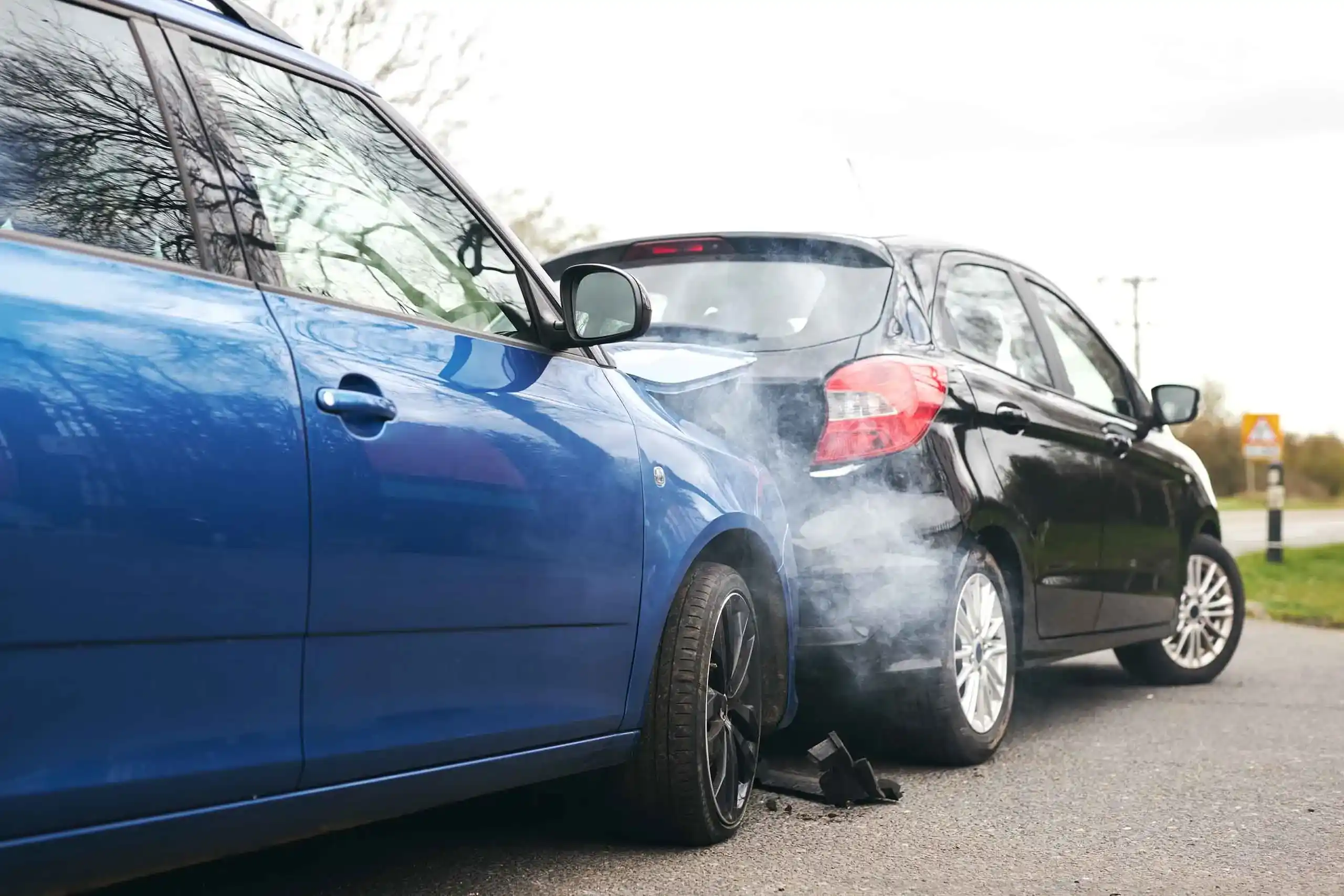
Head-on collisions can cause devastating injuries because two vehicles traveling in opposite directions may meet with tremendous force. A driver may cross the center line, enter a road in the wrong direction, make an unsafe pass, or lose control and move directly into approaching traffic.
At Poltielov Law Firm P.C., we represent people seriously injured in head-on crashes throughout Queens. We investigate how the collision happened, identify the responsible parties, document our client’s losses, and deal with insurance companies throughout the claims process.
If you or a family member was injured in a head-on crash, call 718-880-2911 for a free consultation with a Queens head-on collision attorney.
Why Head-On Collisions Cause Serious Injuries
Unlike many crashes where vehicles are moving in the same direction, head-on collisions involve vehicles traveling toward each other. The force involved can cause major vehicle damage and serious injuries even when one or both drivers are not traveling at highway speeds.
People involved in these crashes may suffer traumatic brain injuries, broken bones, internal injuries, spinal injuries, chest trauma, or damage to the arms and legs. Some injuries require surgery, rehabilitation, physical therapy, and months or years of medical treatment.
Other injuries may not be obvious at the accident scene. Symptoms involving the head, neck, back, or internal organs can develop later, which is one reason injured people should seek medical attention after a serious crash.
Common Causes of Head-On Crashes in Queens
Many head-on collisions begin when a vehicle moves out of its proper lane. Determining why that happened is an important part of establishing fault.
Common causes include:
- Distracted driving
- Drunk or drug-impaired driving
- Drowsy driving
- Speeding
- Unsafe passing
- Crossing the center line
- Wrong-way driving
- Losing control on a curve
- Failing to yield while turning
- Poor weather or road conditions
- Mechanical failure
A driver may also cross into opposing traffic while trying to avoid another vehicle or road hazard. We look at what happened before the impact rather than assuming the position of the vehicles after the crash tells the entire story.
Wrong-Way Driving Can Cause Devastating Crashes
A wrong-way driver can create an immediate danger because other motorists may have little time or space to react. These crashes may happen when someone enters a highway from the wrong ramp, turns onto a one-way street in the wrong direction, or becomes confused at an intersection.
Impairment, distraction, poor visibility, and unfamiliarity with the road can contribute to wrong-way driving. The cause matters because evidence may show whether the driver ignored signs, markings, traffic signals, or other warnings before the collision.
Video footage can be especially useful in these cases. Traffic cameras, dashcams, surveillance cameras, and recordings from nearby properties may show where a vehicle entered the roadway and how long it traveled in the wrong direction.
Crossing the Center Line Can Establish Fault
Many head-on crashes happen when one vehicle crosses the center line of an undivided road. The question then becomes why the vehicle entered the opposing lane.
A driver may have been texting, speeding, falling asleep, impaired, or attempting to pass another vehicle. In other cases, the driver may claim that weather, a mechanical problem, another vehicle, or a roadway condition caused the lane departure.
We gather evidence to determine what happened before the vehicles collided. Photographs, skid marks, debris, vehicle damage, witness statements, police reports, and available video can help establish which vehicle crossed into opposing traffic and why.
Unsafe Passing Can Lead to a Head-On Collision
Passing another vehicle requires enough visibility and distance to complete the maneuver safely. A driver who tries to pass near a curve, hill, intersection, or other area with limited visibility can suddenly find an approaching vehicle directly ahead.
Speed also matters. A driver may misjudge how quickly an approaching vehicle is traveling or how much distance is needed to return to the proper lane.
Evidence showing lane markings, road design, visibility, vehicle positions, and witness accounts can help determine whether an unsafe passing maneuver caused the collision.
Head-On Crashes at Queens Intersections
Not every head-on collision happens because a driver drifts across a center line. Intersections can also produce crashes where vehicles meet nearly head-on.
A driver making a left turn may fail to yield to approaching traffic. Another driver may enter the wrong lane while turning or attempt to beat a traffic signal before opposing vehicles enter the intersection.
Busy Queens streets can make these cases more complicated because several vehicles, pedestrians, traffic signals, and turning movements may be involved. Surveillance footage and witness accounts can help reconstruct what happened during the seconds before impact.
Head-On Collisions on the Grand Central Parkway
Higher speeds can make a head-on crash particularly destructive. Although divided highways are designed to separate opposing traffic, wrong-way entry, loss of control, or crossing a median can still place vehicles in each other’s path.
A collision on the Grand Central Parkway or another major Queens roadway may require an investigation into where the vehicle entered opposing traffic. That may involve reviewing road markings, ramps, signs, barriers, video footage, and witness statements.
When road design or a dangerous condition may have contributed, additional legal issues can arise. Claims involving a government entity may also have shorter notice requirements than a typical personal injury claim.
Commercial Trucks Can Make Head-On Crashes More Severe
The size and weight of a commercial truck can make a frontal collision especially dangerous for people in smaller vehicles. These cases may also involve evidence that does not exist in an ordinary passenger-vehicle crash.
Head-on truck accidents may require examination of driver logs, electronic vehicle data, maintenance records, company records, and other evidence. Depending on the circumstances, the truck driver may not be the only party responsible.
Evidence controlled by a trucking company can also change or disappear over time. Early investigation may help preserve information needed to determine why the truck entered opposing traffic.
Evidence Used to Determine Who Caused the Crash
Head-on crashes can leave a complicated accident scene. Vehicles may rotate, move after impact, or be pushed far from the initial point of collision.
We may use several forms of evidence to determine how the crash happened, including:
- Police reports
- Photographs and video
- Dashcam recordings
- Surveillance footage
- Witness statements
- Vehicle damage
- Skid marks and debris
- Roadway markings
- Electronic vehicle data
- Medical records
Accident reconstruction may also be useful when fault is disputed or the sequence of events is unclear. The goal is to determine how each vehicle moved before impact and what actions contributed to the collision.
What to Do After a Head-On Collision
Call 911 after a serious collision and request medical assistance when anyone is hurt. A police response can also create an official record of the crash and document information about the drivers, vehicles, witnesses, and accident scene.
If you can safely do so, take photographs or video before the vehicles are moved. Capture the vehicle positions, damage, roadway, lane markings, traffic signals, signs, skid marks, debris, and surrounding conditions. Collect contact information from witnesses as well.
Seek medical attention even if you initially believe your injuries are minor. Do not admit fault or give unnecessary statements about how the crash happened before all of the facts are known.
New York No-Fault Benefits After a Head-On Crash
New York generally requires people injured in motor vehicle accidents to first seek certain economic benefits through no-fault insurance. Personal Injury Protection can pay qualifying medical expenses, a portion of lost earnings, and certain other reasonable expenses regardless of who caused the collision.
Basic no-fault coverage generally provides up to $50,000 per person in qualifying economic losses. A written application for no-fault benefits generally must be submitted within 30 days of the crash.
These benefits do not resolve every loss caused by a serious collision. A person whose injuries meet New York’s serious injury requirements may also have a claim against the at-fault driver for damages that are not available through basic no-fault coverage.
New York’s Serious Injury Threshold
New York law limits when someone injured in a motor vehicle accident can pursue compensation for non-economic damages such as pain and suffering. The injury generally must satisfy one of the state’s statutory serious injury categories.
Those categories include fractures, significant disfigurement, certain permanent or significant limitations, and other qualifying injuries. Head-on crashes can result in severe injuries that require extensive medical treatment and may affect a person’s ability to work or complete normal activities.
Whether an injury satisfies the legal threshold depends on the medical evidence and circumstances. We review medical records and treatment when evaluating the damages available in a car accident claim.
Compensation After a Head-On Collision
The financial impact of a serious collision can continue long after the damaged vehicles have been removed. Medical treatment, time away from work, rehabilitation, and lasting physical limitations can affect both the injured person and their family.
Depending on the case, compensation may include:
- Medical bills and future medical costs
- Lost wages
- Reduced future earning ability
- Rehabilitation and therapy expenses
- Property damage
- Pain and suffering
- Emotional distress
- Other economic and non-economic losses allowed by New York law
There is no standard settlement amount for a head-on collision. We evaluate the injuries, medical treatment, financial losses, insurance coverage, fault, and long-term effects when determining what compensation should be pursued.
Insurance Companies May Dispute Fault and Injuries
Even when another vehicle crossed into your lane, the other driver’s insurance company may challenge parts of the claim. An adjuster may dispute how the crash happened, argue that you could have avoided the collision, question medical treatment, or claim that some injuries existed before the accident.
Recorded statements can also become an issue. What seems like a simple conversation with an insurance adjuster may later be used to challenge the claim.
We handle communications with insurance companies, provide supporting documentation, and respond when an insurer disputes fault or the extent of our client’s injuries. If a fair settlement cannot be reached, we prepare the case based on the evidence and available legal options.
Comparative Negligence in New York
New York follows a pure comparative negligence rule. An injured person may still seek compensation even if they share some responsibility for causing the collision.
For example, an insurer might argue that an injured driver was speeding or could have reacted differently before impact. If that driver is ultimately assigned part of the fault, compensation can be reduced by that percentage.
Shared fault does not automatically end a personal injury claim. Evidence showing how the collision occurred becomes especially important when the other driver or insurance company tries to shift responsibility.
Fatal Head-On Collisions
The forces involved in a head-on crash can cause fatal injuries. When another person’s negligence causes a death, the case may involve claims for losses suffered by the deceased person’s estate and eligible family members.
A fatal crash may lead to a wrongful death claim involving lost financial support, funeral expenses, certain medical costs, and other damages permitted under New York law. Different filing rules and deadlines apply to wrongful death cases.
We investigate fatal collisions carefully because the injured person is no longer available to explain what happened. Physical evidence, witnesses, video, vehicle data, and accident reconstruction may become especially important.
Deadline for Filing a Head-On Collision Lawsuit
New York generally provides three years from the date of an accident to file a negligence-based personal injury lawsuit. Waiting until the deadline approaches can make investigating the collision more difficult, even when the lawsuit itself can still be filed.
Other deadlines can arise much sooner. No-fault benefits have their own notice requirements, and claims involving a government entity can require a Notice of Claim within a much shorter period.
Evidence also has practical deadlines. Video can be overwritten, witnesses can become difficult to locate, and vehicles can be repaired or destroyed. Starting an investigation early can help preserve information that may later be needed.
Frequently Asked Questions About Head-On Collisions
Who Is Usually at Fault in a Head-On Collision?
Fault often depends on which driver entered the opposing lane and why. A driver who crossed the center line, drove the wrong way, made an unsafe pass, or failed to yield may be responsible for the crash. Police reports, vehicle damage, video, witnesses, and other evidence can help establish what happened.
What If the Other Driver Says I Crossed the Center Line?
A disagreement between drivers does not decide fault. Physical evidence from the accident scene, vehicle damage, skid marks, roadway evidence, video footage, electronic data, and witness statements may help determine which vehicle left its lane. A detailed investigation is particularly important when each driver gives a different account.
Can I Recover Compensation If I Was Partly at Fault?
Yes. New York’s comparative negligence rule allows an injured person to recover damages even when that person shares some responsibility for the collision. The amount recovered can be reduced according to the percentage of fault assigned to that person.
What If the Other Driver Was Uninsured?
Uninsured motorist coverage may provide a source of compensation when the at-fault driver does not have required insurance. The available coverage and claims process depend on the policy and circumstances. Other possible insurance coverage should also be investigated before determining the sources of recovery.
How Long Do I Have to File a Head-On Collision Claim?
A negligence-based personal injury lawsuit generally must be filed within three years of a New York motor vehicle accident. Other deadlines can be much shorter, including deadlines involving no-fault benefits and claims against government entities. The specific facts determine which deadlines apply.
Can I Recover Pain and Suffering After a Head-On Crash?
Potentially. New York’s no-fault system limits when someone injured in a motor vehicle accident can pursue non-economic damages. If the injuries meet the state’s serious injury threshold, pain and suffering and other qualifying damages may be available in a claim against the responsible party.
How Much Is a Head-On Collision Case Worth?
There is no reliable average settlement that determines what an individual case is worth. The value depends on the injuries, medical costs, lost income, future treatment, property damage, insurance coverage, fault, and long-term effects of the crash. We evaluate those factors based on the evidence in each case.
Speak With a Queens Head-On Collision Attorney
At Poltielov Law Firm P.C., we represent people injured in serious car accidents throughout Queens. In a head-on collision case, we investigate why the vehicles collided, gather available evidence, evaluate insurance coverage, document injuries and financial losses, and handle communications with insurers.
Head-on crashes can leave people facing significant medical treatment, time away from work, and lasting changes to everyday life. We build each case around what actually happened and how the injuries have affected our client rather than relying on generic settlement values.
Call 718-880-2911 to schedule a free consultation with our Queens head-on collision attorney.